Let’s face it: Playing with kittens is one of the most adorable things that there is!
Playing with your kitten will inevitably bring up this common and really big question, “Can I use my hands to play with my cat?”
Using your hands can seem perfect: your hands are always there, and your kitten can nip at them, bunny kick, and attack. They seem almost wired to do this to those hands.
However, this may not be the wisest thing to do. A kitten is one thing, but your cat will grow up. Then those kicks, bites and scratches become very painful for yourself and sometimes others.
Keep reading to get the scoop on “Can I use my hands to play with my cat?”
The problem with using your hands to play with your cat as a kitten is that they can learn to think this is an acceptable form of play. This is no problem when they are young, but when they grow up, this can lead to painful scratches and bites. As an adult, you may not be able to reteach this behaviour to your cat, or you may only get partial results. Teaching cats proper play as kittens is by far the wisest thing to do. Of course, there are pros and cons to playing with your hands with your cat. Versing yourself in these will help you to make an informed decision. If you find your cat biting and scratching, there are things you can try. For example, redirecting your cat to a toy they can claw over time can change this behaviour. All in all, never punish your cat! This will be completely fruitless and only lead to even worse things!
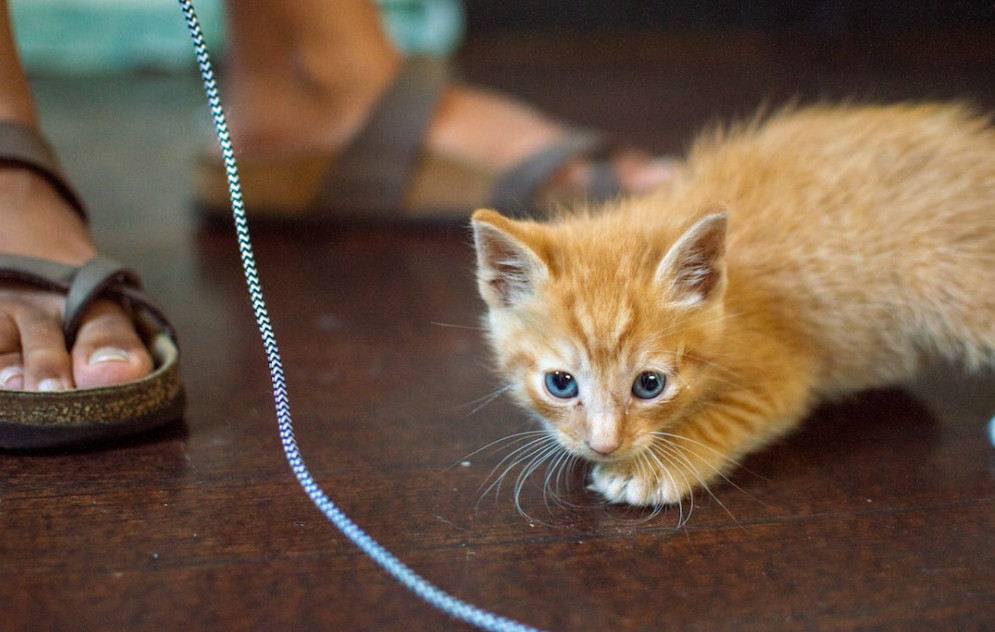
Kittens are the definition of adorable when it comes to play.
They can grab onto your hands, bite your fingers, and kick your arms.
Little teeth and claws don’t hurt, so, in general, cat owners don’t think much of this.
However, the problem is that your cat, as a kitten, can learn that this is an appropriate form of play. When your cat grows up, those same claws and teeth can lead to painful bites and scratches.
But, can you just reteach your cat to play nice when they are older? Then you can have your cake and eat it too.
That would be terrific, but the problem is that sometimes the old saying, “You can’t teach an old dog new tricks,” does change to, “You can’t teach an old cat new tricks.”
Sometimes, you will not be able to reteach your cat, or you will only get partial results.
My Experience With My Cat
I will be honest and say that I don’t have a problem with this, generally speaking, with my cat. My cat will never bite, but he will scratch. He does this to say, “Hey, that’s enough! I don’t feel safe! No more of that!”
Not that I am ever playing unsafely with my cat, or hurt him, but cats can be sensitive to play and feel threatened by it- especially with their stomachs.
But, I have tried to teach my cat to go for walks with me!
It is slow going, and the same principle is illustrated in that process. I didn’t have my cat as a kitten, but if I had, and if I had taught the kitten to walk then, it would be way easier to walk with him as an adult cat!
Taking your cat for a walk is a fascinating topic- and yes you can teach them to walk! If you would like to know more about this, see our article here. For more reading on cat exercise, see our guide here.
—>>Related: want to know why your cat attacks your hand when you pet his or her belly? see the answer here. <<—
*Keep in mind that with all these pros, you can also get these without using your hands to play with your cat. For example, you can bond with your cat in other ways. Grooming your cat yourself and playing with them with physical toys (other than your hands of course) is also bonding!
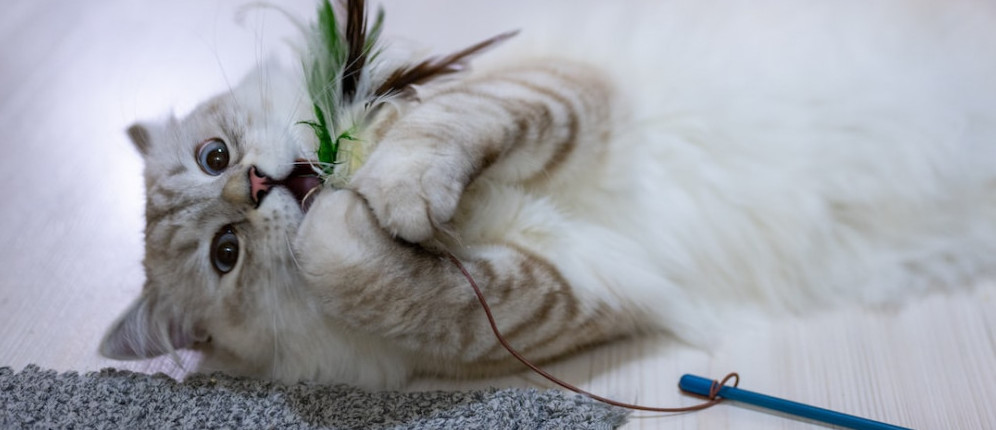
What do you do if your cat has already developed the habit of scratching and biting you?
There are some things you can do!
1. Divert your cat’s attention
Have a toy nearby that you can quickly substitute for your hand. In this way you are communicating to your cat that you still want to play, but in a different way.
If you do this continually your cat might catch on.
2. If you suspect that your cat may pull out his claws or bite during play, you can plan ahead.
Simply put on some long sleeves or a hoodie before playtime. You can also wrap yourself in a blanket.
3. Stop play, redirect to a safe toy, and reward play with the safe toy
Treats can be a powerful motivator! You can use our cat’s favourite food or cat treats from the pet store, anything that is special to them that they don’t get very often.
4. Walk away.
If you simply stop and walk away, your cat will learn to stop this behaviour, because it leads to you walking away! However, come back after a short amount of time to engage in safe play with them so that they don’t see this walking away behaviour as a punishment.
5. Make sure they are getting their play requirements in
Making sure that you are playing with your cat in safe, positive ways, consistently, every day, will make them less likely to engage in negative behaviours, as they do this primarily to get your attention!
Yes, when your cat is scratching and biting, sometimes they actually mean to say I love you and I want to play! (As backwards as that may sound to us humans).
Don’t engage in punishing your cat for unwanted behaviour, including scratching, biting, pouncing and clawing on hands.
This is definitely cruel to your cat, but also simply will not work. You won’t end up with the results that you wanted.
Your cat will not understand that what they are doing is ‘wrong’ through a punishment. They will be drawn away from you, learn to dislike and fear you, as well as interaction with you. They can also develop anxiety.
As Matt Wildman, cat behaviourist, nicely states in his article on the Humane Society of the United States,
“The idea is to train them, not punish them, and to make sure their energy needs are met on a daily basis.”
–>For more ideas on terrific and interesting toys you can easily buy on amazon, see our top picks here.<–
For more on appropriate play techniques, try Pam Johnson-Bennett, author and cat behaviourist who has some great tips learned from experience.

There is no doubt that cats need to play! This may not be a very well-known concept yet, but it is universally acknowledged by experts, behaviourists, and experienced pet owners.
Play leads to enrichment and safe ways to bond with your cat and help for them to release their energy.
Playing with them with your hands can teach them that your body parts are toys and lead to harm for yourself. It is best to teach your cats to play nice as kittens, but there are strategies that you can try to reteach play as adults.
Never punish your cat, but train them in healthy ways to play in the best way possible for everyone.
How do you train your cat? We would love to hear from you below! Drop us a comment 🙂




Leave a comment